The Toronto Spark primarily focuses on underrepresented artists. However, it also publishes a column by David Suzuki to advance education about critical issues, including this one about non-stop growth.
Growing economies, growing industry, growing cities, growing population, growing pollution… When does it stop?
Our current economic system is obsessed with constant growth; everything must keep expanding—except for the natural systems on which our health and survival depend. Those are shrinking, destroyed by our obsession with growth.
The human population has been multiplying rapidly, especially since the beginning of the industrial revolution. From 1800 to 1927, population doubled from one to two billion. It doubled again by 1974 and has since doubled to more than eight billion. Along with it, our appetite for resources, especially in the wasteful West, has grown exponentially—not to meet human “needs”, but to perpetuate a system that puts profits above everything.
It’s malignant. It’s suicidal. And it’s unfair. The obscenely wealthy hoard money and resources, amassing billions of dollars, luxury yachts, mansions and private jets while others starve and struggle to survive. Corporations plunder the Global South for minerals and oil, leaving local and Indigenous Peoples with legacies of pollution and scarred landscapes.
Where will malignant growth end?
We build roads and parking infrastructure so people can transport themselves in large, inefficient machines, powered by polluting, climate-altering fuels or massive, resource-heavy batteries. We spend colossal amounts of money to mine minerals and produce sophisticated weapons used to destroy.
Air, water, and land are polluted and degraded as the climate heats to catastrophic levels, yet we continue to burn fossil fuels and devastate carbon sinks. The consequences are escalating and worsening rapidly: extreme weather, water shortages, floods, droughts, plant and animal extinction, increased conflict and human migration, agricultural failures… the list goes on.
Where does it end?
Many think this system is inevitable, unchangeable. But it’s relatively new, and humans have always adapted to changing conditions and advancing knowledge.
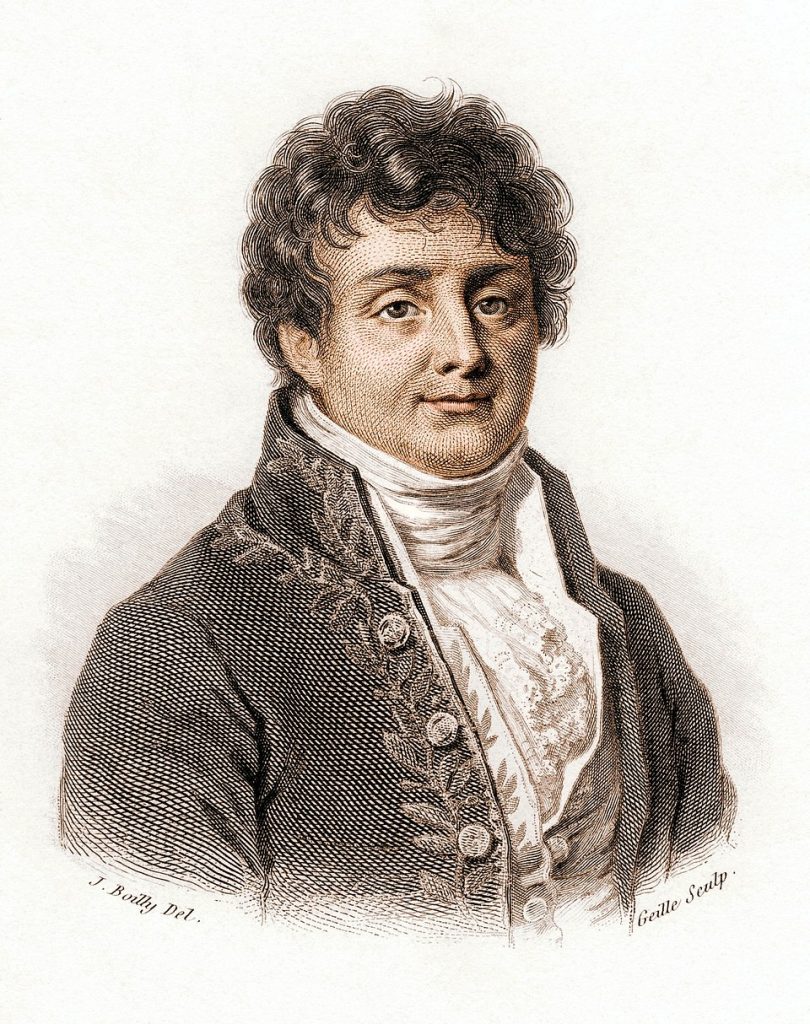
It could be argued that we didn’t know any better when we switched from wood to coal for power or whale oil to crude oil for lighting—although the greenhouse effect has been studied for more than 200 years, at least since French mathematician and physicist Jean-Baptiste Joseph Fourier described what is now called the “greenhouse effect” in 1824.
As recently as the early 20th century, when the human population was much smaller, it seemed the planet offered limitless bounty, that there was plenty of land, timber, minerals, and fossil fuels to create prosperity and profits. In North America especially, industrialists saw that selling gas-guzzling cars and building infrastructure for them could generate enormous profits for the newly booming oil and auto industries. People were convinced that travelling in their own massive, inefficient vehicles was the key to freedom.
Although capitalism has always been based on growth, and consumerism took hold in the United States early in the 20th century, today’s rampant resource-depleting consumerism really kicked into high gear after the Second World War.
Mill argued for “stationary state” economy
In 1955, retail analyst Victor Lebow wrote, “Our enormously productive economy demands that we make consumption our way of life, that we convert the buying and use of goods into rituals, that we seek our spiritual satisfaction and our ego satisfaction in consumption. … We need things consumed, burned up, worn out, replaced and discarded at an ever-increasing rate.”
But has our never-satisfied gluttonous appetite really brought “spiritual satisfaction” or happiness? Saner thinkers—from English philosopher and political economist John Stuart Mill in 1848 to U.S. economist John Kenneth Galbraith in 1958—have pushed back against this wasteful ideology.
Mill argued for a “stationary state” economy with a stable population and high but stable standard of living. Galbraith wrote, “What of the appetite itself? Surely this is the ultimate source of the problem. If it continues its geometric course, will it not one day have to be restrained? Yet in the literature of the resource problem this is the forbidden question.”
The planet offers everything we need to survive and thrive, but not if we continue to wastefully exploit it. Most of the resources are consumed, and most of the pollution created, in the wealthy Western world. Yes, human population should be stabilized, but the bigger problem is rampant consumption.
The solutions are here; we just need to dispense with destructive and outdated ideas about growth and profits. In doing so, we might find what truly leads to “spiritual satisfaction” and happiness.
David Suzuki is a scientist, broadcaster, author and co-founder of the David Suzuki Foundation. Written with David Suzuki Foundation senior writer and editor Ian Hanington. Learn more at davidsuzuki.org.
Learn more about the communities that make up Canada on the Toronto Spark website. The Toronto Spark is on Bluesky @torontospark.bsky.social.