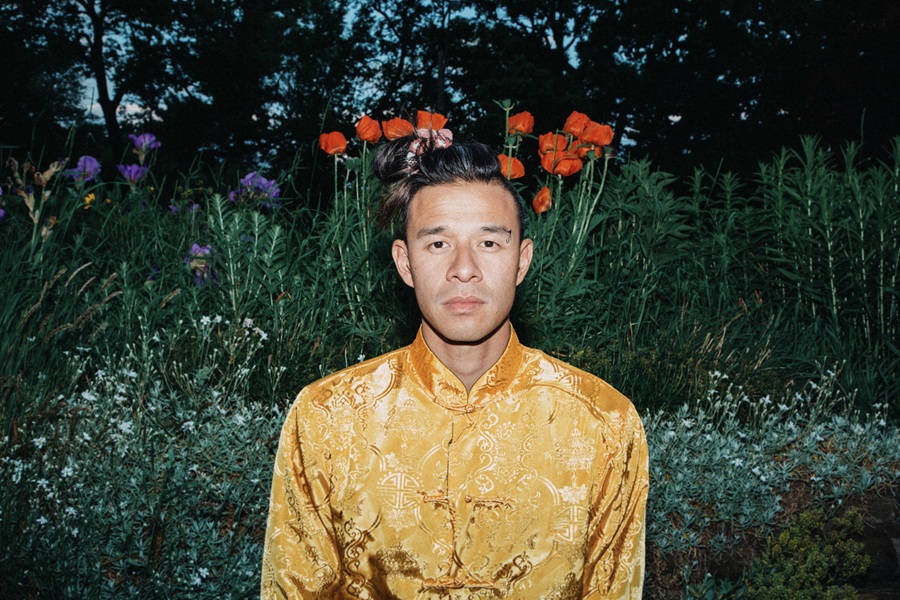
Rising Vancouver literary star Yilin Wang 王艺霖 (she/they) didn’t initially plan on become a translator of modern and contemporary Chinese poetry. Instead, she dreamed of being a writer and poet.
In Grade 12, she began writing freelance pieces for Canadian publications. Later, she enrolled in the MFA program in creative writing at the University of British Columbia.
“I started realizing that a lot of the literature that I read and was exposed to was very Eurocentric and really focused on the western canon,” Wang says. “Despite the fact that I am bilingual and grew up bilingual—and have been exposed to Chinese literature since I was quite young—it wasn’t really being taught in the classroom.”
As a result, she felt that she couldn’t fully tap into literature written in Chinese for inspiration.
“So, I started consciously seeking out more works in translation and reading more Chinese literature,” Wang continues. “And I also started noticing that there’s a trend where a lot of Chinese literature—especially classical works—have been translated by Sinologists.”
Moreover, these academics were often white and she sensed that they had more of a “clinical anthropological kind of relationship with language”. Wang contrasted that with her own lived experiences with Mandarin and her personal connections to Chinese poetry through heritage and upbringing.
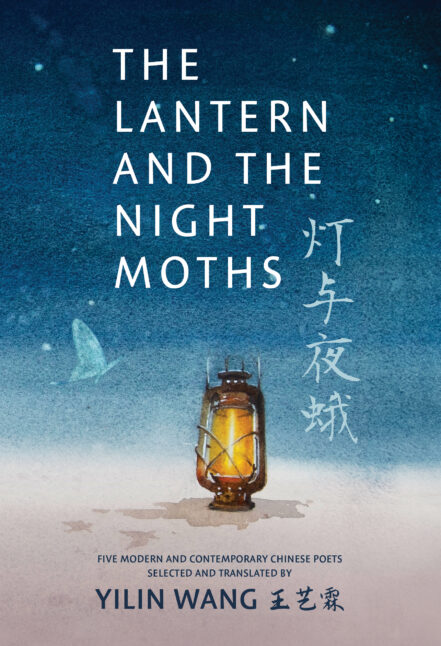
All of this led to Wang editing and translating The Lantern and The Night Moths, which Invisible Publishing released earlier this year. On October 22, the Literary Translators Association of Canada announced that Wang’s book is a finalist for the prestigious John Glassco Translation Prize.
According to the association, this award goes to a translator “whose first book-length translation (fiction, non-fiction, poetry, drama or children’s literature) stands apart for its literary merits or precision”.
Wang finds solace in Sinophone poetry
In The Lantern and the Night Moths, Wang translates into English the works of five modern and contemporary Chinese poets—Qiu Jin 秋瑾, Zhang Qiaohui 张巧慧, Fei Ming 废名, Xiao Xi 小西, and Dai Wangshu 戴望舒. In addition, Wang includes brilliant essays to contextualize why she selected these poets.
“When I feel uprooted and directionless, I often turn to Sinophone poetry for solace, just as the wanderer in Qiaohui’s poem searches for a Buddhist pagoda in the misty darkness,” Wang writes. “As the speaker insightfully observes, those of us residing far away from a distant home can have a tendency to romanticize it.”
However, she notes in this essay that she’s not seeking to physically return to China.
“Rather, I believe that the yearning for home is, in itself, a language of diaspora,’ Wang declares. “When I carry Sinophone poetry into English, I reconstruct a pristine replica of the pagoda that has long faced into the horizon for many and that has never been seen by others.”
It’s evocative, compelling prose. It helps explain why the Vancouver Writers Fest invited Wang to speak on a panel about translation earlier this month.
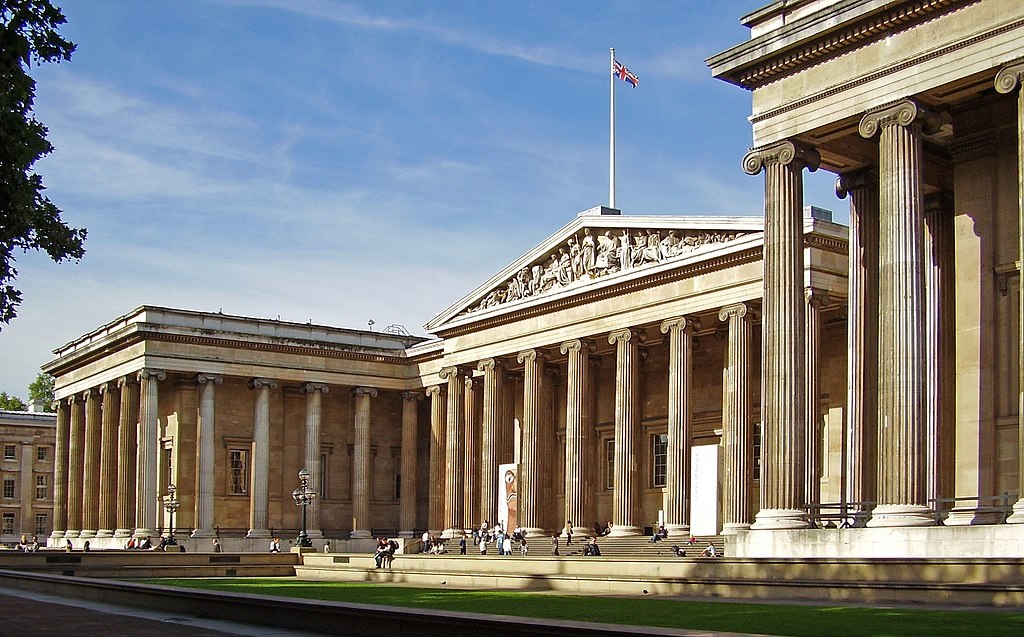
Wang’s writing has appeared in many publications. They include Clarkesworld, Fantasy Magazine, the Malahat Review, Grain, CV2, The Ex-Puritan, Toronto Star, and Words Without Borders. As a translator, she became internationally famous in 2023 in connection with a controversy at the British Museum. The institution apologized in a settlement agreement after her translations of Qiu Jin’s poetry in an exhibition without permission. Wang offers her side of this story on her website.
Longing for a kindred spirit
Wang acknowledges that she was thinking about Qiu Jin’s work as a translator as she arranged the sequence of poems in her book. Qiu Jin’s poems appear first.
Wang describes Qiu Jin (1875-1907) as a very important feminist poet in Chinese history.
“She wrote a lot about this longing for a kindred spirit, which is literally like the one who understands your music, the one who understands your songs,” Wang says. “And I felt the idea of speaking and longing for a kindred spirit is, in a way, also connected to the art of translation. It’s often a dialogue with the poet I’m translating, whether they have passed or they’re living.
“And it’s also a dialogue with the reader and it’s a dialogue that crosses languages and cultures and borders.”
Wang reveals that the incident with the British Museum affected her emotionally. But it also resulted in many people learning about her work as a translator.
The second poet in the book, Zhang Qiaohui (1978-), addresses matrilineal history, according to Wang. In addition, this poet explores the “relationship with hometowns and heritage, languages, and the preservation of history in the face of rapid modernization and gentrification”.
“I found that really fascinating and relatable as someone who grew up in the diaspora,” Wang says. “And even though she herself didn’t have the experience of living overseas, I felt like the themes that she tapped into are very evocative. They’re also very common in Chinese poetry.”
Yiling Wang 王艺霖 speaks to Toronto Spark editor Charlie Smith.
Other Chinese poets intrigue Wang
Wang describes Fei Ming (1901-1967) as a modernist poet. According to her, he was “kind of overlooked during his lifetime, despite being very influential on the more recent generations of modern Chinese poets”.
“He was known as a very elusive poet—someone who was very difficult to understand,” Wang states. “So, I was very fascinated by his work, but also really struggled to translate it.”
However, writing about him enabled Wang to address the ambiguity and silences in Chinese poetry.
Wang points out that the fourth poet, Xiao Xi (1974-), sometimes employs whimsical and humourous language in offering commentary on contemporary Chinese society.
“I found that really innovative and very thought-provoking, and I’m in the process of translating more of her work.”
The final poet, Dai Wangshu (1905-1950), was a translator and one of the most well-known modernist poets in China. He travelled extensively in Europe, Wang says, and his translations of western works inspired many Chinese poets at the time.
She notes that translators have traditionally focused their attention on classical Chinese poetry from the Tang Dynasty. This has brought the works of poets like Li Bai and Du Fu to the attention of westerners.
“I wanted to give folks a sense of contemporary and modern Chinese poetry,” Wang says. “I specifically wanted to give folks a range of different kind of styles and different themes. So, I picked poets who spoke to me personally.”
She also feels that academic translations don’t capture the poetic beauty of the language nor the complexity of Chinese poetry. Furthermore, Wang maintains that machine translation, whether it’s through Google or anything else, tends to “fail spectacularly”.
“Poetry written in Chinese is often more concise,” Wang states. “It’s full of allusions and idioms. The grammatical structures are different.”

From Sichuan to Canada
In addition, the Chinese language doesn’t treat tenses in the same way as English. And in Chinese, she states, the subject of a sentence or some prepositional phrases are sometimes omitted. And that presents challenges for any translator.
Poetry, in particular, is not only focused on word choice and style. There’s also the emotional experience. Wang views her job as a translator to integrate that along with the subtext and ambiguities that exist in reading the poem.
“I consider that a lot when I’m translating the poetic techniques and the style.”
Her interest in poetry began as a child in her hometown of Yibin in Sichuan. This southwestern Chinese province is famous for its panda bears and spicy food, as well as its magnificent rivers.
“I grew up with my maternal grandparents, and my grandpa used to tell me stories from Chinese literature,” Wang reveals.
Her grandfather also helped her learn to recite classical Chinese poetry. After the family moved to Canada, Wang became interested in writing in English. She has also lived in the United States and the United Kingdom. As a result of moving to several cities, she says that she hasn’t felt permanently attached to one place or one identity.
Wang captures that sentiment in the first paragraph of The Lantern and the Night Moths. It’s excerpted from her personal essay, “Faded Poems and Intimate Connections: Ten Fragments on Writing and Translation”, which was first published in 2022.
“Being an immigrant in the diaspora can often feel like drifting in a vast ocean with no shorelines in sight,” Wang writes. “When home isn’t a person, or a place, or memories, but a wisp of smoke just beyond my grasp, a glass castle so ephemeral and elusive, poetry is one of my rare lifelines.”
For a list of Yilin Wang’s speaking engagements, visit her website. Follow Charlie Smith @charliesmithvcr.bsky.social.