By Katree 徐暘
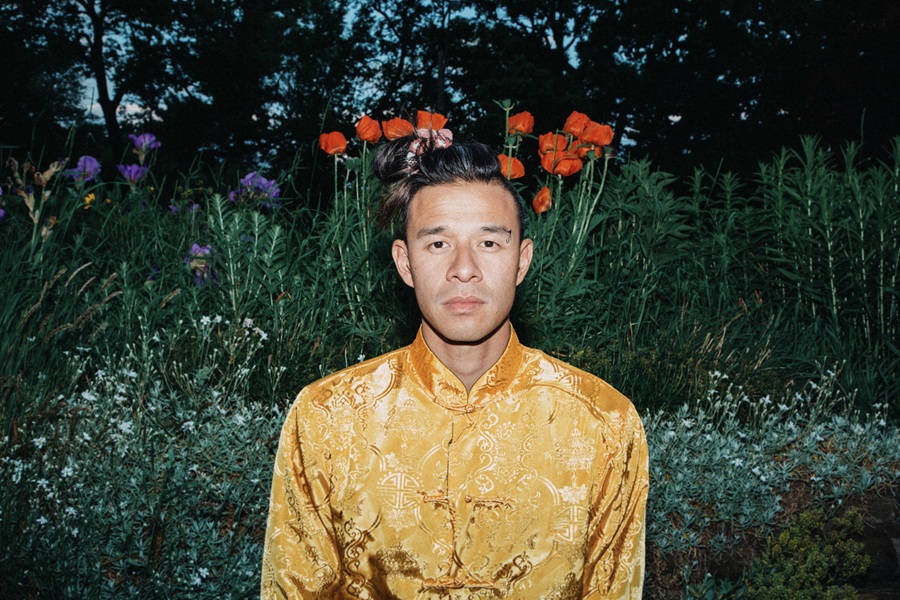
Tennyson King grew up loving rock and metal before his tastes shifted toward the Beatles, Tim Buckley, and Bob Dylan. These days, his influences run toward Eddie Vedder and Jack Johnson, along with the artists he has encountered on recent trips to Taiwan.
King’s music today is defined less by any single influence. Traditional Chinese instrumentation is layered into the indie folk sound he grew up playing in Canada, funneling into his upcoming album, 100 Cities.
100 Cities took nearly five years to make. It began as a journey of trying to reconnect with his heritage and culture. King booked sessions with traditional Chinese musicians in Toronto and Vancouver, listening and recording as they explained and demonstrated instruments like the erhu, guzheng, and pipa. Only after absorbing the material did he begin writing in a folk-pop style, aiming for melodies catchy enough to reach mainstream audiences in North America.
“I really wanted to try to bridge that gap,” King says, pointing to how traditional music often gets filed under “world music” and limits the reach to listeners as a result. He prefers the traditional elements of 100 Cities to be more accessible to everyone, e.g. a bar gig on a Tuesday night, instead of only being heard during specific events that are focused on world music.
The album’s title comes from 百城, his Chinese name. “A lot of people don’t know my Chinese name,” King says, “because I grew up in Canada where it wasn’t really necessary to tell people.”

Being Chinese while growing up in Canada
Raised in a predominantly white part of Canada, King watched bands play guitar and sing rock and roll, which made him want to play that style of music as opposed to learn more about his own culture. “I was not proud of being from Hong Kong or Chinese,” he says, “because when we immigrate somewhere, we just want to assimilate.”
Not growing up with music or art that reflected his own heritage back to him, King hopes 100 Cities will reach the younger generation, especially Chinese, Hong Kong, and Taiwanese Canadians. “I would love for them to listen to that music and be like, ‘Oh, the guzheng is so cool. I want to learn it.”
Discovering Hakka instruments for the first time in Taiwan
Much of King’s research has taken him deeper into his Hakka heritage. At a Hakka Bayin(客家八音)workshop hosted by Jade Music Fest, he encountered a set of traditional Hakka instruments he’d never seen before, brought by a young Taiwanese musician working to preserve them.
King noticed the instruments echoed ones he already knew from traditional Chinese music, but with a rougher, improvised quality, “more homemade,” as he puts it. He connects that quality to Hakka history itself, a people cast away from China who made do with what they had.
The same trip took him to a Hakka farm, where organizers served a meal of traditional Hakka dishes, many of them foods King realized he’d grown up eating without knowing their origin.
Living as a nomad
Since 2017, King has toured without a fixed home, and he sees that restlessness as an echo of Hakka migration itself. “I think it’s crazy that Hakka people were such a migrating type of people that just wandered and found different homes,” he says, “and that’s exactly what I’ve been doing.”
Everywhere he’s traveled, he’s been welcomed, and he imagines his Hakka ancestors experienced something similar wherever they settled. “It almost makes me feel a bit less lost in life,” he says. “Maybe this is what I was meant to do.”
Collaborating across a language barrier
Working on 100 Cities also meant collaborating with Mandarin-speaking musicians, a shift from King’s usual English-language creative partnerships.
“It was tough at first because sometimes I just didn’t have the words,” he says. He learned to communicate musically, playing ideas rather than explaining them. “The beautiful thing about music is that it’s a universal language.”
King says the collaborators who work best with him share a few qualities above all: openness, a lack of ego, and a willingness to have fun. “If we lose that fun, that childish kind of desire to have fun and play, it can be harder to create and to collaborate.”

Advice for reconnecting with heritage
For young Canadians discovering their heritage later in life, King’s advice to anyone in the same boat is to carve out actual time for it.
“If you want to learn about the heritage, make the community that you surround yourself with of those same people,” he says. He points to music and art as natural entry points for anyone starting that journey, since heritage and history have always been passed down through story, art, and song rather than through formal study alone.
100 Cities is out on November 6 and Tennyson King will perform at an album release set at Jade Music Fest. This free event will take place at 6:30 p.m. on Sunday, November 8 at Revue Stage on Granville Island. To learn more about Tennyson King, visit his website or follow him on Instagram @tennysonking.
Jade Music Fest runs from November 3 to 8 in Vancouver. The author of this piece, Katree, is a singer-songwriter, music producer, and photographer based in Taiwan. Learn more about her by visiting her website.
The Toronto Spark is on Bluesky @torontospark.bsky.social.


