Much will be said about Justin Trudeau’s decision to resign as prime minister. Some will criticize him for running large deficits or praise him for a wage-subsidy program that kept millions of Canadians employed during the pandemic. Others will focus on his support for Ukraine or his inability to put a dent in Canada’s greenhouse gas emissions.
However, on the film front, Canada has never been stronger in reflecting the diversity of the country. That’s demonstrated by the success of a long list of Canadian feature films in recent years. They include Bones of Crows, Ru, Queen of My Dreams, Seagrass, Riceboy Sleeps, In Flames, and Brother, to name just a few.
In Stephen Harper’s final full year as prime minister, the government granted $95.5 million to Telefilm Canada to fund 87 feature films. The country’s primary film-funding agency allocated $11.6 million for multicultural and Aboriginal content in 2014-15.
In 2021, the Trudeau government announced a $105-million increase in funding to Telefilm Canada over three years. That lifted the parliamentary appropriation to $155.3 million in 2023-24. According to Telefilm Canada’s most recent annual report, 149 feature films were funded in 2023-24. That’s a 70 percent increase over the final year in the Harper era.
In the last fiscal year, Telefilm Canada supported 43 projects with $27.8 million in which at least one of the key creative positions (directing, writing or producing) were held by racialized people. Another $4 million in funding went to 20 projects by Indigenous creators.
Films in more languages in Trudeau era
Telefilm also changed its funding rules in 2021. This ensured that eligible Canadian features must no longer be mostly in French, English or an Indigenous language. This opened the door for films reflecting the diversity of Canada.
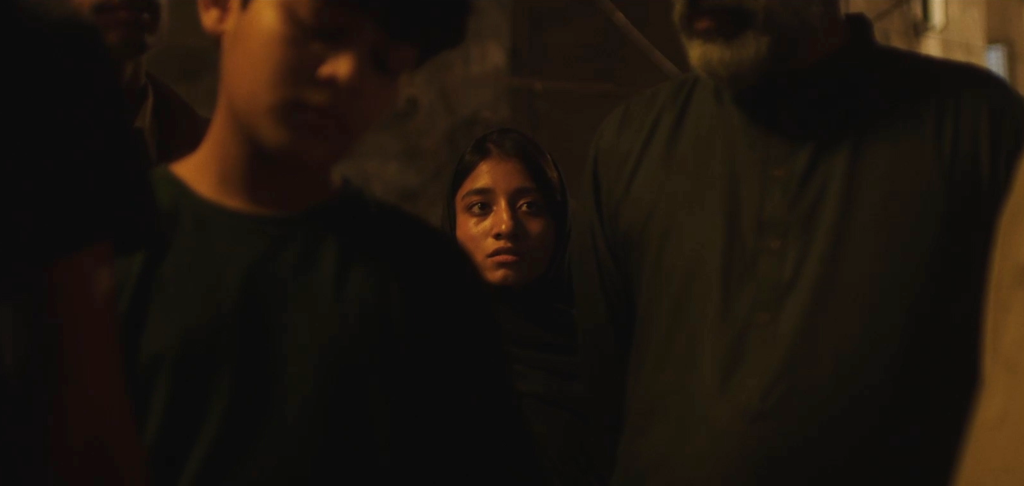
For example, it meant that Toronto filmmaker Zarrar Kahn could make his award-winning In Flames in Urdu. His became the first film with financing from Telefilm’s Talent Fund to be selected for the Cannes Film Festival. In the most recent fiscal year, Telefilm Canada funded nine projects with a “significant percentage” of Arabic, Finnish, Hungarian, Japanese, Mandarin, Persian, and Vietnamese dialogue.
In the past, Vancouver filmmaker Anthony Shim had to maintain 50 percent English dialogue to gain funding for his stunningly successful immigrant tale Riceboy Sleeps, about a Korean immigrant single mother and her son. Now, a Vancouver filmmaker like Mayumi Yoshida can make a movie about her grandmother with a higher percentage of Japanese dialogue, which will be subtitled for English-speaking audiences.
Some credit must go to filmmakers, including Yoshida, who advocated for this change. But another factor has been the efforts of the Racial Equity Screen Office, which was founded by Vancouver Asian Film Festival creator Barbara Lee. It generated data that has forced organizations like Knowledge Network and the National Film Board to reckon with how they were distributing public funds.
Federal funding for the Canadian Broadcasting Corporation also increased during the Trudeau era. This enabled the launch of CBC Gem, which makes content available for free to Canadians online.

CBC funding trails other public broadcasters
In Harper’s final full year in office, the government granted $1.04 billion in funding to the Crown broadcaster, accounting for 63 percent of total revenue. For the fiscal year ending in 2025, the Trudeau government funding had risen to $1.38 billion, accounting for 70 percent of CBC’s revenues.
Yet CBC still lags behind other public broadcasters in per capita public funding. According to former CBC president and CEO Catherine Tait, CBC receives $33 per Canadian per year, which is four times less than the public allocation in the U.K. and France. She said in a statement last year that CBC’s parliamentary appropriation is eight times lower than the per capita public funding for Germany’s public broadcaster. No doubt, part of the reason is political. Conservative Leader Pierre Poilievre has repeatedly promised to defund the CBC, whipping up public opposition to the Crown corporation.

Meanwhile, the National Film Board of Canada received a $59.9-million appropriation from the Harper government in its final full year in office. By 2023-24, it had risen to $66.5 million. Last year, one NFB co-produced film, To Kill a Tiger, was nominated for an Oscar in the Documentary Feature Film category. Toronto director Niha Pahuja filmed To Kill a Tiger in Jharkhand, which is a state in Eastern India.
Furthermore, the Trudeau government remains committed to funding domestic films in the wake of the Telefilm’s last financial report.
“Telefilm enthusiastically welcomed the announcement of $50 million in additional funding per year, for the fiscal years 2024-2025 and 2025-2026, from the Government of Canada and Canadian Heritage,” the annual report states.