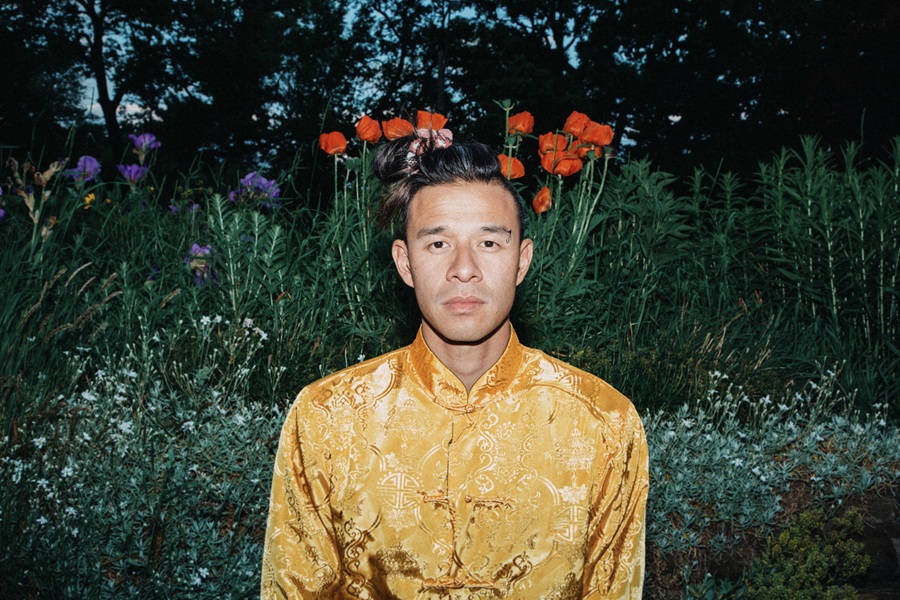
A dazzling Two-Spirit cellist died in a car crash in Northern Alberta. Toronto-based composer and performer Cris Derksen, 45, was driving home from her father’s funeral when the collision occurred. Derksen’s wife, Tuscaroran and Scottish Two-Spirit Iroqueer vocalist Rebecca Bensen, is reportedly in critical condition.
Derksen’s aunt, Theresa Johnson, wrote a tribute on Facebook to her niece.
“My extraordinary, gifted, radiant, cherished niece Cris may have left us prematurely, but her profound legacy and enchanting music will perpetually uplift me. There has to be a divine purpose why I had to bid farewell to her merely a week after laying my brother Bernie, her dad, to rest,” Johnson wrote. “She serenaded him with her cello one final time, and this poignant moment will forever be etched in my memory as a testament to her remarkable talent.”
In a separate post on Facebook, the AIM Booking Agency said that Derksen (she/they) was much more than a client—she was family.
“To know Cris was to know a force of nature,” the company stated over social media. “She was fiercely authentic and deeply generous, and she brought an uncompromising spirit to everything she touched. Her art was a reflection of her soul: poignant, powerful, grounded in heritage, and relentlessly innovative.”
Derksen, a Juno nomineem, brought Indigenous music to the forefront through the Orchestral Powwow project, which included an Aniishinaabeg family drum group called the Chippewa Travellers. In these performances, the Chippewa Travellers led the orchestra rather than having a conductor do this.
Derksen was once the principal cellist with the Vancouver Symphony Orchestra and performed with 15 differeent symphonies and chamber orchestras across the country. In a 2021 conversation with VSO music director Otto Tausk, Derksen said that her music is deeply influenced by her mixed Indigenous and settler heritage.
“I find it speaks to both sides and it’s very Canadian, really,” Derksen noted.
Derksen’s scores were recently heard in two dance productions in Vancouver. Ballet Vancouver’s world premiere of Winterbourne, co-created by Joshua Beamish and Yolonda Skelton, was performed in late April. Derksen also wrote an original score for the Royal Winnipeg Ballet’s production of Cameron Fraser-Monroe’s T’əl: The Wild Man of the Woods. It was performed in Vancouver in February.
“She has this incredible breadth as an artist,” Fraser-Monroe told Pancouver earlier this year. “She has debuted at Carnegie Hall with 90 players from Orchestre Métropolitain [de Montréal] and also does incredible solo electronic work.”
The Toronto Spark is on Bluesky @torontospark.bsky.social.