One of Canada’s great theatre artists is directing a full-length reinterpretation of William Shakespeare’s most famous tragedy. Ex Machina founder and artistic director Robert Lepage has teamed up with Côté Danse artistic director Guillaume Côté on The Tragedy of Hamlet: Prince of Denmark. Together, the two renowned Quebec-born artists tell the melancholic Hamlet’s story through dance and theatrical wizardry.
Shaw One Productions will present this 105-minute visual spectacle at 8 p.m. on April 24, 25, and 26 at the Elgin Theatre (189 Yonge Street) in Toronto.
“Hamlet is undoubtedly the longest and deepest play in the Shakespearean repertoire,” Lepage says on the Shaw One Productions website. “But when we strip away the words, the skeleton still remains and the meaning doesn’t disappear. We note with astonishment how the work exists beyond the literary.
“Dance generates breath, energy, and gestures that can reveal hidden meanings concealed by the lyricism of the text,” the director continues. “Dance gives the characters bodies, muscles, flesh.”
Shakespeare’s Hamlet is populated by so many memorable characters. Hamlet’s uncle Claudius, the King of Denmark, is the villain of the piece and is recently married to Hamlet’s mother, Gertrude. Polonius is the pompous Lord Chamberlain in the king’s court; Polonius’s daughter, Ophelia, is Hamlet’s love interest. In addition, there’s Ophelia’s brother Laertes, The Ghost of Hamlet’s father, and the bumbling courtiers Rosencrantz and Guildenstern.
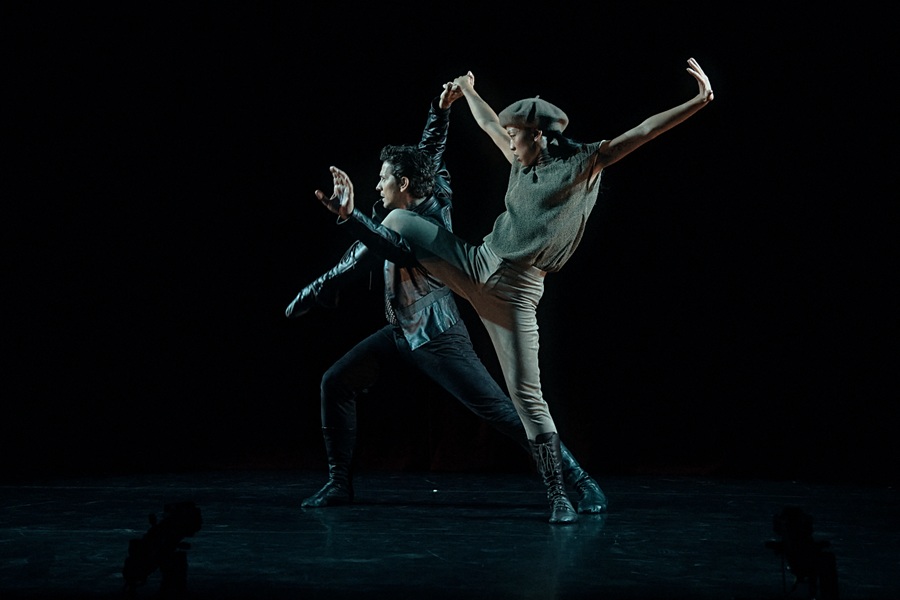
Embodying Hamlet through the body
In The Tragedy of Hamlet: Prince of Denmark, cast members express these characters through movement, drawing upon classical, contemporary, and street-dance influences.
“Through the body, the work is embodied, literally,” Lepage notes. “It becomes three-dimensional, magnifying passion, violence, sensuality and is able to tell the story of this brilliant reflection on existence and the vagaries of indecision in a remarkable way.”
Côté, a principal dancer with the National Ballet of Canada, takes on the role of Hamlet on April 24 and 25, with Kealan McLaughlin as Hamlet on the April 26 matinee. Sonia Rodriguez, a former principal dancer with the National Ballet of Canada, plays Gertrude.
Other cast members include Robert Glumbek (Claudius), Carleen Zouboules (Ophelia), Lukas Malkowski (Laertes), Michel Faigaux (Polonius), Natasha Poon Woo (Horatio), Jake Poloz (Rosencratz Aril 24 and the April 26 matinee), Connor Mitton (Rosencrantz on April 25)), and Willem Sadler (Guildenstern).
Composer and eight-time Dora Mavor Moore Award winner John Gzowski wrote the score. Toronto-based lighting designer Simon Rossiter bathes the stage in pools of golden light.
Event details
Shaw One Productions will present Ex Machina and Côté Danse’s The Tragedy of Hamlet: Prince of Denmark at the Elgin Theatre (189 Yonge Street) in Toronto on April 24, 25, and 26. For tickets and more information, visit the Shaw One Productions website.
The Toronto Spark is on Bluesky @torontospark.bsky.social.