A novel about a YouTuber’s examination of the violent Partition of India has won the most lucrative Punjabi-language literary prize in the world.
Jalandhar-based writer Balbir Parwana is the author of Rauleyan Vele (In the Time of Unrest). Its main character, Gurpreet Singh, is on a quest to figure out this bloody period—in which hundreds of thousands were killed—has remained in the shadows of history. While investigating what happened on both sides of the Radcliffe Line that divided Punjab between India and Pakistan, Singh meets a Pakistani researcher based in Canada.
Earlier this month, a jury awarded Parwana the 12th annual Dhahan Prize for Punjabi Literature, which comes with a $25,000 cash award.
“This award has given my novel a new world of readers,” Parwana said in a Dhahan Prize news release. “When I heard my name announced, I was filled with joy and excitement. I’m encouraged to keep creating.”
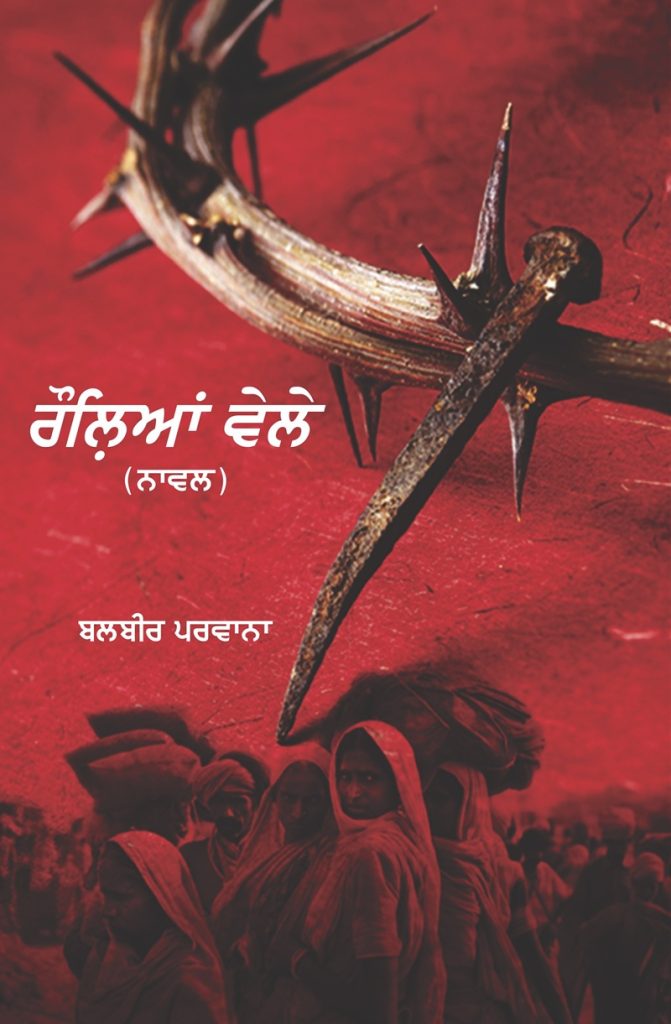
In a review in the Toronto Spark, Canadian writer Gurpreet Singh (no connection to the novel’s character) declared that the novel offers hope for a better future and peace between India and Pakistan.
“The author also tries, even though very sparingly, to link the 1947 tragedy with the post-independence acts of sectarian violence in India,” Singh added. “He examines the complicity of the political leadership in inciting the basest emotions of the people to sustain power.”
The Canada India Education Society and UBC’s Department of Asian Studies launched the Dhahan Prize in 2013 with financial support from Vancouver businessman Barj S. Dhahan and his wife, Rita Dhahan. They, along with family and friends, are the primary funders. RBC Foundation is the presenting partner.
“Our mission is to celebrate and elevate Punjabi literature on a global stage,” Barj S. Dhahan stated. “By recognizing powerful new tales in Punjabi fiction, we aim to inspire readers, support authors, and strengthen cultural connections across borders.”

The two runners-up this year were Pakistani writer Mudassar Bashir and Indian writer Bhagwant Rasulpuri. They each received $10,000.
The Lahore-based Bashir is the author of Goyal (Precious Shelter). “It is a big accomplishment to be named Finalist,” Bashir said in the news release. “Now, my stories can break past the boundaries of the Punjabi language and reach readers of other languages as well.”
Rasulpuri, who hails from Jalandhar, authored the short-story collection Delivery Man.
“I feel breathless. It is an honour,” Rasulpuri declared. “I love my mother tongue of Punjabi. With this award, I hope to continue my service to it.”
In addition, the Dhahan Prize for Punjabi Literature granted $6,000 for the transliteration of the three books into Gurmukhi (commonly used in India) or Shamukhi (commonly used in Pakistan).
For more information about the Dhahan Prize for Punjabi Literature, visit the website. Find the Toronto Spark on Bluesky @torontospark.bsky.social.