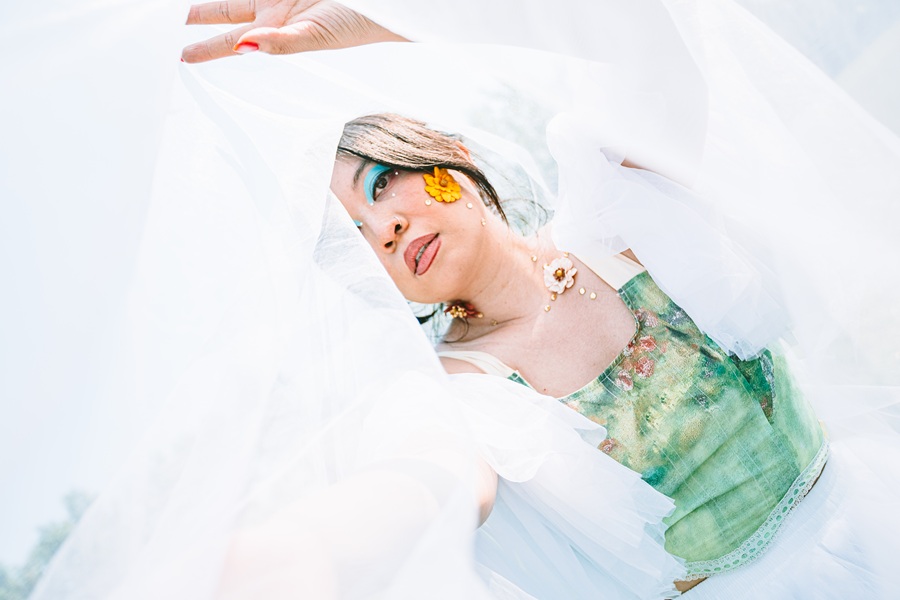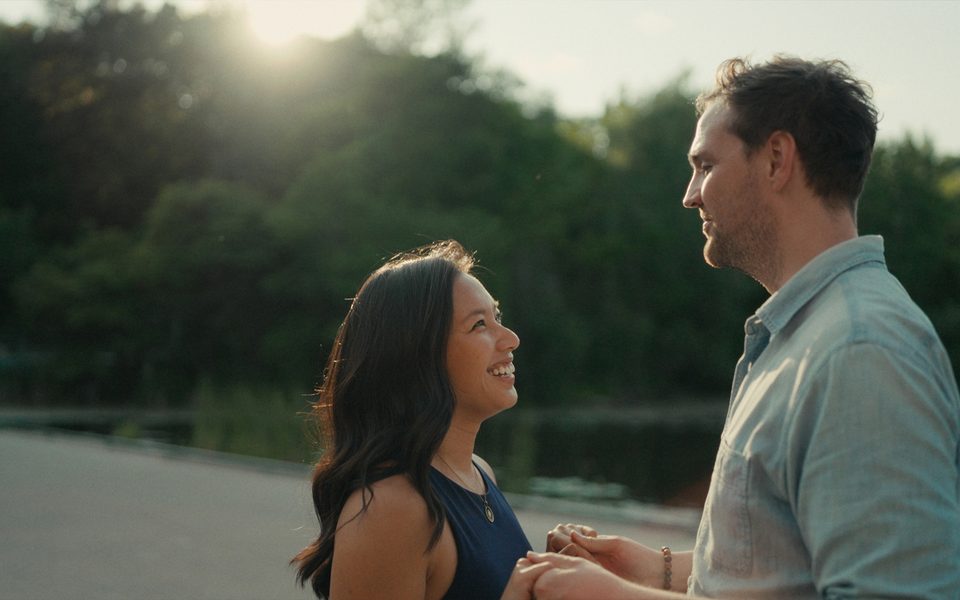
The Toronto Spark has reposted this Pancouver article by Shruthi Budnar because First Comes Love: Nakabingwit will have its Ontario premiere at 10 a.m. on Sunday (October 25) at Scotiabank Theatre as part of the Reelworld Film Festival + Summit. Budnar’s article is about the film’s world premiere earlier this month at the Vancouver International Film Festival.
By Shruthi Budnar
In the afternoon, on October 3, in a SkyTrain from New Westminster to Vancouver’s Chinatown, I marvelled at the distant sight of Mt. Baker, whose peak surpasses colonially drawn borders on clear blue days.
Soon, I retreated from the sunlight, into SFU Woodward’s to attend the world premiere screening of First Comes Love: Nakabingwit at the 45th Vancouver International Film Festival. An inventive documentary by Vancouver-based filmmaker, Joella Cabalu, the film’s promotional material had a cheeky hook—a hybrid rom-com doc that delves into interracial romance between Filipinos and their white partners.
The film’s cast and crew, and the filmmaker’s diverse community, including friends and professional acquaintances, packed nearly every seat in the room. The excited murmurs lingered even as the lights dimmed. When the afternoon’s moderator, Kinga Binkowska, introduced Joella Cabalu, she walked into the spotlight to a very warm applause. “Welcome to my wedding”, she quipped, suitably dressed in white.

Cabalu’s introductory remarks were followed by an invitation for everyone to participate in a collective exercise called the Unity Clap, or Isang Bagsak. “It means one fall”, she said, “if one of us falls, we all fall. Conversely, if one of us rises, we all rise.” We all proceeded to clap together, and when Cabalu yelled, “Isang Bagsak!” our palms synced for a resounding, collective clap.
My mind drifted briefly to a memory of my first Isang Bagsak community clap:
It was not far from here, at the SFU Harbour Centre, the tail end of April 2025, less than a week since the Lapu-Lapu Day tragedy. Titled “Honoring the Land”, a free open-mic storytelling event had been organized by Living Hyphen, a community hub for racialized storytellers.

Originally meant to be a gathering for sharing stories that honour the land, our environment, and ecosystems that give life to us all, the event had pivoted to hold space for those who needed to share expressions of grief and loss felt deeply by the community. Justine Yu, co-founder of Living Hyphen, a Filipina herself, had facilitated the grieving space. It was at this event that I met Cabalu for the very first time.
Justine also happens to be one of the principal subjects in First Comes Love: Nakabingwit. Today, she was present at the screening with her (visibly nervous) partner Dominic Pollard.

The opening scene of First Comes Love: Nakabingwit, with a signature rom-com flavour, immediately hooked the audience. The next 65 minutes felt like a conjugal convalescence, replete with chuckles, groans, sighs, and sniffles.
Three sets of real life couples welcomed us into their homes for candid conversations and authentic portraits of their everyday life. Vulnerable, yet with the clarity of hindsight, they delved into how racial identity, class difference, colourism (all different aspects of white supremacy) show up for couples within interracial relationships. Complementing the real talk, was a charming rom-com sidebar, reenacted based on Cabalu’s own relationship with her partner Luka. The movie ended on a feel-good note, and a surprise appearance that I will not spoil here.
As claimed in the title, the hybrid format wields a humorous bait to not only unpack colonial trauma, but also deliver generous servings of wit and wisdom in Tagalog.
“How would you describe Kapwa to a non-Filipino?” asks Mathilde, one of the film’s subjects. Her Filipina partner, Vero says, “People say shared identity, shared heritage, shared culture. At the end of the day, we share this world.” This foundational value of interconnectedness, I have learned, motivates how my Filipina/o/x friends show up for their kin, no matter the color of our skin.

When immigrants arrive in Canada, it can be a long path before we rediscover the sense of community and rebuild the comfort of the homes that we left behind. The Filipino diaspora is no stranger to this phenomenon. I witnessed the community show up with enormous care to share grief after the Lapu-Lapu Day tragedy in April 2025.
Despite being a non-Filipino person (I’m a first-gen immigrant from Bengaluru, South India), my self-imposed walls based on racial identity crumbled at the storytelling gathering. Helmed by Justine’s considerate facilitation, we shared stories of grief and gratitude, yearned for a kind world, shed tears and chortled at silly remarks. The simple act of gathering had a profound impact on how I try to show up for racialized kin as a cultural worker.

During the premiere screening, the three couples featured in the documentary were seated together in one of the front rows. They were all watching the film for the first time. My gaze occasionally landed on them and I’d notice one person reaching for a partner’s hand, or another person wiping away a silent tear—gestures that grounded me in feeling a certain empathic solidarity: Kapwa. Conversations such as acknowledging colorism as a parent, how food can be a cultural bridge, how to overcome the trauma of racist encounters, I realised, are easier to navigate, when processed in the presence of a caring community.
The moments of levity in the film are sprinkled in with profound socio-cultural insights, indicating Cabalu’s mastery at navigating multiple narrative and cultural threads. The internal tussle between romantic desire (often framed through individualist notions of belonging to one special person) and the longing for shared belonging within a marginalised diaspora, is represented with a spirit of authenticity, in a hybrid medium, demonstrating how those two notions could simultaneously co-exist.
Not only has Cabalu found her village among other Filipina sisters featured in the film, but she has also collaborated with many other racialised artists in this film. Prominent among them include Peter Planta as the Director of Photography and Mary Ancheta as the Music Composer. Both of them, along with the film’s producer Teri Snelgrove, shared the stage for audience interaction after the premiere screening.
In so many ways, First Comes Love: Nakabingwit has subverted popular media representations of desire and belonging by expanding the ambit of a rom-com into a Bayanihan. Cabalu’s ability to conceive a moment of intense personal conflict into a creative project that involves wider community has resulted in a vibrant piece of culture for anyone navigating similar struggles in racially diverse relationships.
The National Film Board of Canada will present the Ontario premiere of First Comes Love: Nakabingwit at the 2026 Reelworld Film Festival + Summit. It will be screened at 10 a.m. on Sunday (October 25) at Scotiabank Theatre (259 Richmond Street West, Toronto). Tickets are available on the Reelworld Film Festival + Summit website.
Shruthi Budnar (she/they) is a writer, zine-artist and cultural worker on the unceded lands of the Halkomelem speaking peoples, by the Stó:lō river. Her poetry, short stories and collage-based zines carry forward solarpunk and abolitionist ethos. They are passionate about curating arts gatherings and documenting local events with diverse community voices and perspectives. To learn more, follow Shruthi on Substack or Instagram.
The Toronto Spark is on Bluesky @torontospark.bsky.social.