There’s nothing quite like grief or lost love to stir up emotions. When these situations appear in polished form on the big screen, it can bring audiences to tears.
Vancouver writer-director-actor Mayumi Yoshida incorporates both themes brilliantly in her captivating new dramatic feature, Akashi. The Centrepiece Gala Presentation at the Toronto Reel Asian International Film Festival on November 9, Akashi begins with Yoshida’s character, Kana Yamamoto, travelling from Vancouver to Tokyo for her beloved grandmother’s funeral.
The friendly Japanese taxi driver (Hiro Kanagawa) compliments Kana’s English after hearing her speaking on the phone with a friend in Canada. Kana, a professional artist, brushes off the praise. But it won’t be the last time that Kana is perceived to be an anomaly in her homeland after being absent for 10 years.
It’s a feeling that non-resident Indians, Filipinos, Chinese, and countless others can identify with when they visit their birth countries years after moving to Canada. Even though Kana speaks flawless Japanese in cosmopolitan Tokyo, she still has a “gaijin” [outsider] vibe, according to former boyfriend Hiro (Ryo Tajima).
Yoshida’s script unfurls one surprise after another. Prior to her death, her grandmother shared a secret about her husband with Kana. This spurs Kana’s curiosity to learn more while also leaving her deeply conflicted because her grandfather was her artistic mentor. A secondary story line addresses Kana’s feelings about Hiro upon their reunion.
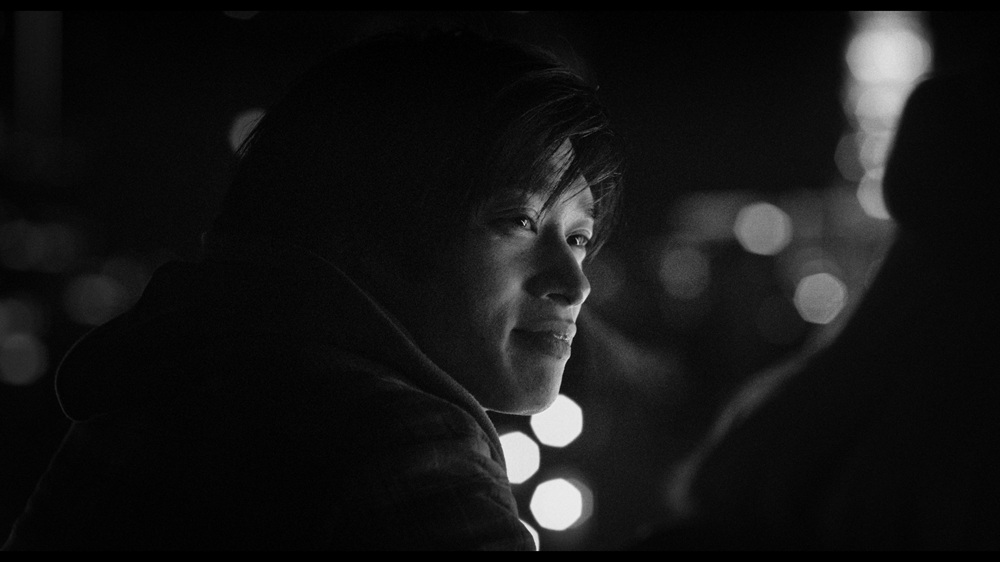
Akashi benefits from talented supporting cast
There is much to praise about Akashi. Yoshida and the charismatic Tajima share genuine chemistry on-screen while ably conveying how a former couple might behave together after so many years apart. The supporting Japanese actors—Hana Kino (Grandma), Kimura Bun (young Grandpa), Kunio Murai (Grandpa), and Chieko Matsubara (Wakako)—deliver nuanced performances. Often, they convey the pain of their star-crossed lives through their eyes in polite Japanese society. And Kanagawa, who’s based in Vancouver, is simply a delight to watch on-screen.
The film’s premise is so very plausible and the art direction, set design, original music, and black-and-white imagery reinforce a melancholy mood tinged with regret over the past. Family harmony is rarely punctured, even in the face of situations that might lead to explosive conflict in the West.
Meanwhile, Hiro speaks frankly about his attachment to place. This offers a blunt reminder of the pain of immigration on those who choose to leave their homeland for no other reason than to remain with a spouse. It’s a topic rarely addressed in contemporary discourse, yet it comes alive in Yoshida’s capable hands.
In sum, Yoshida has created a deeply layered, honest, and complex film that traverses the past and present with remarkable dexterity. This will come as no surprise to anyone who saw her outstanding 2017 short “Akashi”, upon which the feature film is based. Her father was a journalist and she was raised in Tokyo, Brussels, and Washington, D.C., which explains her proficiency in Japanese and English.
If you’re planning to visit a theatre to watch Akashi, make sure you bring some hankies. That’s because you might find yourself moved to tears on more than one occasion.
Screening details
The Toronto Reel Asian International Film Festival will screen Akashi at its Centrepiece Gala Presentation at 7 p.m. on November 9 at TIFF Lightbox C2. It will be followed at 9:30 p.m. at CSI Spadina by a Q&A with director Mayumi Yoshida and producer Nach Dudsdeemaytha, moderated by Reel Asian artistic director Aram Siu Wai Collier. For tickets and more information, visit the festival website.
Learn more about the communities that make up Canada on the Toronto Spark website. The Toronto Spark is on Bluesky @torontospark.bsky.social.