
There are approximately 80 million Hakka people in the world, including 4.6 million in Taiwan and about 35,000 in Canada. This distinct subgroup of Han Chinese has its own culture, language, and ways of life. However, there are also contrasts between Hakka people in different countries, which fascinates Taiwanese academic Lieh-Shih Lo. An associate professor at the College of Hakka Studies at National Yang Ming Chiao Tung University in Taiwan, Lo’s research focuses on Hakka communities in Taiwan and Malaysia.
“As a globally dispersed ethnocultural group, the Hakka have continually undergone processes of adaptation, intergroup interaction, and localization wherever they have settled,” Lo tells the Toronto Spark. “What makes this journey particularly compelling is the way Hakka communities around the world, in their search for identity and belonging, persistently seek to connect with one another while maintaining deep-rooted ties to their ancestral homelands.”
More than half of all Hakka people in Canada live in the Greater Toronto Area. As part of Toronto TAIWANfest, Lo will deliver a free lecture on the significance of the Taiwanese Hakka experience for Hakka communities in Canada. It will take place at 4:30 p.m. on August 24 at Lakeside Terrace in Harbourfront Centre.
As a cultural anthropologist, Lo will frame his discussion around history, globalization, and inter-ethnic relations. He will give a similar presentation at Vancouver TAIWANfest at 4 p.m. on August 31.
“Drawing from Taiwan’s Hakka history—especially the complex and evolving relationships between Hakka settlers and Indigenous Peoples—I will offer a comparative perspective that includes Southeast Asian Hakka experiences,” Lo states. “Finally, I hope to engage in dialogue with Hakka communities in Toronto and Vancouver to collaboratively shape a deeper understanding of what it means to be Hakka in Canada today.”
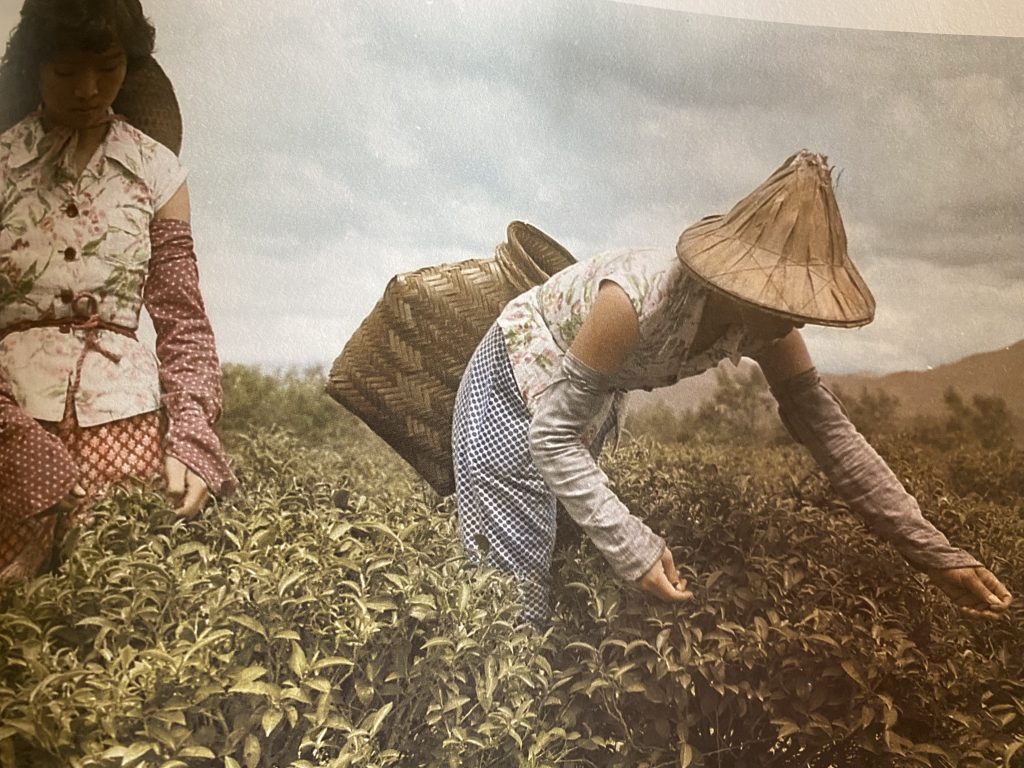
Hakka people built sustainable communities
Hakka people in Taiwan are known for their tenacity, which has been forged by their history. During the fall of the Song dynasty in the 13th century, Hakka people migrated from north China to Guangdong, Fujian, Jiangxi, and Guangxi in the south. A famine in China in 1630 spurred the first major Hakka migration to Taiwan. Another wave followed after Southern Ming general Koxinga expelled Dutch colonial rulers in 1662.
“Taiwan’s ecological environment, well-suited for wet-rice agriculture, attracted migrants from Fujian and Guangdong,” Lo explains. “In the early stages, Hakka people came to Taiwan as seasonal agricultural labourers. Over time, they gradually secured land-use rights and began to settle permanently.
“Although arable land was limited in the low hill regions of northern Taiwan, the Hakka—renowned for their expertise in land and water management—were able to establish a foothold and build sustainable communities in these areas,” he continues. “Once a localized society of small-scale rice farmers took shape, the growing needs for daily goods, children’s education, and cultural and religious practices began to draw artisans, tradespeople, and other migrants to Taiwan as well.”
Lo speaks the Hailu variety of Hakka. His 2006 doctoral dissertation, “The Formation of Hakka in Taiwan”, established a foundational paradigm for Taiwanese Hakka studies. Moreover, he has paid close attention to relations between Taiwan’s Indigenous tribes and Hakka settlers over centuries.
“Due to competition over territory and resources, tensions and even conflicts between Hakka Han settlers and Indigenous Peoples were, at times, unavoidable,” Lo notes. “However, Hakka–Indigenous relations varied greatly across different regions and historical periods. Among the Plains Indigenous groups, for instance, close cooperation occurred in northern Taiwan, where many Plains peoples were eventually assimilated into Hakka communities.”
Resisting Japanese colonization
Lo addes that in central Taiwan, cooperation also existed. Yet Plains Indigenous groups often adopted strategies of continual migration in search of new settlements. Meanwhile, in southern Taiwan, Hakka and Plains Indigenous communities had a more distant relationship. Many of the latter now primarily speak Minnanese (Hoklo/Taiwanese).
Hakka people and Indigenous tribes actively resisted Japanese colonization of Taiwan from 1895 until 1945. Hakka and Indigenous tribes also faced the imposition of Mandarin in public life. This came after Chiang Kai-shek imposed dictatorship following his forces’ loss in the Chinese Civil War. After the Kuomanting government finally lifted martial law in 1987, Hakka people held protests demanding the return of their mother tongue.
“Shaped by Taiwan’s unique historical experience, the Hakka—often in a position of relative social and political marginalization—have continually adapted to the local ethnocultural and ecological landscape,” Lo emphasizes. “Through this process, they developed what is now recognized as Taiwan’s distinct Hakka cultural tradition, one that the community takes pride in preserving.”
Furthermore, the professor maintains that Hakka people strengthened their distinct cultural tradition in Taiwan through political and social movements. Back in 1996, elementary school curriculum guidelines introduced the Hakka language into Taiwanese classrooms. In 2019, local language instruction, including Hakka, became mandatory in junior and senior high schools.
Alongside these reforms, the Hakka Affairs Council has advanced Hakka language proficiency assessments and support programs to encourage broader usage.
“In so doing, Hakka have not only affirmed their own place in Taiwanese society but also contributed meaningfully to inter-ethnic dialogue and democratic participation,” Lo states.
Ann Cheng translated the interview with Prof. Lieh-Shih Lo.
Event details
Toronto TAIWANfest will present Prof. Lieh-Shih Lo in a free Hope Talk entitled Global Hakka, Local Ties: Taiwan Indigenous–Hakka Relations Reframed. He will speak at 4:30 p.m. on August 24 at Lakeside Terrace in Harbourfront Centre. For more information, visit the Toronto TAIWANfest website. Learn more about the communities that make up Canada on the Toronto Spark website. Find the Toronto Spark is on Bluesky @torontospark.bsky.social. Follow Charlie Smith on Bluesky @charliesmithvcr.bsky.social.


