Normally, human beings might express horror if they were to be compared to insects. But in the National Film Board–produced animated short film “Boat People”, it’s highly affecting, once you get past the initial shock.
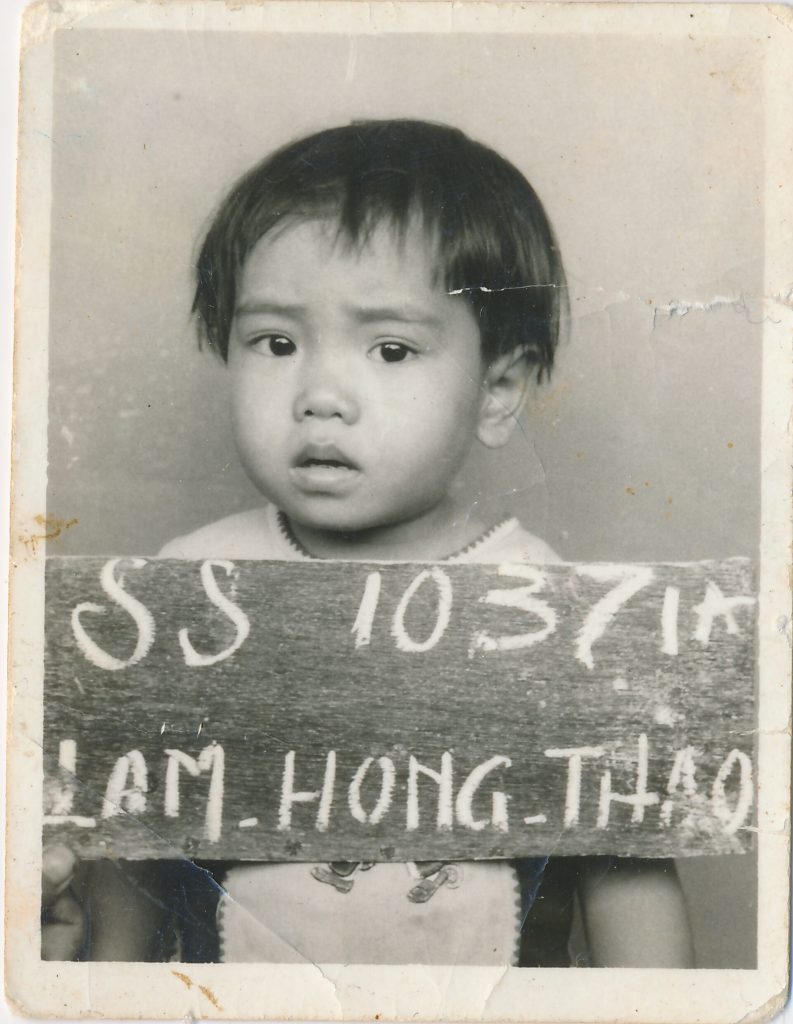
Directed and written by Toronto children’s book author and illustrator Thao Lam and Toronto animator Kjell Boersma, “Boat People” recounts a difficult journey that Lam’s family made from Vietnam to Canada. Lam, who was only two years old at the time, was among the 1.6 million refugees who fled their homeland, mostly by boats, after it fell under Communist control in the 1970s.
On November 19, “Boat People” achieved the distinction of being featured as a Staff Pick on Vimeo. As a result, it’s now available for free to anyone in the world with an Internet connection.
“The curation team was impressed by how the film employs a deceptively simple, children’s storybook-like animation style to tell an emotionally rich and complex story of war, loss and survival,” Vimeo stated.
“Boat People” is also available through the National Film Board, YouTube, POV.org, and the PBS app.
According to Lam and Boersma, their film is “a reminder that nobody willingly abandons their home, leaving behind their family, friends and possessions”.
“Throughout history, every migration, animal or human, is done out of necessity, and should be embraced with empathy and understanding,” they declared in a statement. “Grateful to Vimeo for bringing this to a global audience.”
“Boat People” involved extensive research
Near the start of the film, Lam reveals that her mother liked telling stories of rescuing ants from bowls of sugar water.
“For years, I did not understand the sad silence that followed when I asked about the war and their journey across the South China Sea,” Lam says as the film’s narrator. “All I knew were the stories told by my mother—how the ants she rescued as a little girl saved her in return.”
From there, Lam describes several parallels between the behaviour of ants and humans. For example, both can make tremendous sacrifices for the benefit of their colonies.
Her words are accompanied by striking 2-D animation, 3-D rendering, and stop-motion multipanels, which bring stories of the ants’ behaviour and the fleeing mother and child together. Moreover, the shading is magnificent, adding to the mood and ramping up tension.
“We did a ton of research, on both the Vietnam War and ant behaviour,” Lam says in an interview on the NFB website, “and we began seeing all kinds of connections: how ants have an instinct not simply to survive but also to protect each other. The script went through many stages, but I think we’ve found a nice balance between the two stories.”
Watch “Boat People” above.
Building intergenerational understanding
In the same interview, Boersma says that human beings don’t perceive ants as individuals. Similarly, he suggests that the term “boat people” also “tends to obliterate people’s individuality”.
“But we’re telling Thao’s personal story with this film, embedding something personal in history, and I think the title plays on that idea, singling out a specific story from the anonymity of history,” Boersma adds.
The end result is impressive. “Boat People” is an illuminating and captivating story about one family’s experience fleeing Vietnam. By offering insights into why parents have such difficulty in sharing unpleasant events from the past with their children, the film also enhances intergenerational understanding and builds empathy. And it accomplishes all of this in only 10 minutes.
No wonder it won several prizes, including the Helen Hill Award for Animated Short and the Audience Award for Animated Short at the New Orleans Film Festival in 2023. That year, “Boat People” also captured the Milos Stehlik Global Impact Award at the Chicago International Children’s Film Festival, as well as the Grand Jury Prize for Animated Short at the Calgary International Film Festival.
Follow the Toronto Spark on X @TOSparkOfficial. Follow Charlie Smith on Bluesky @charliesmithvcr.bsky.social.